Source Conveyor Belt Welding Machine for Mining, Ports, and Cement
Find 30 conveyor belt welding machine options tailored for industrial applications. Compare models with varying power, cooling systems, and automation levels to suit mining, power plants, and port operations. Select from semiautomatic and automatic grades with CE certification and customizable packaging.
Key considerations
Products List


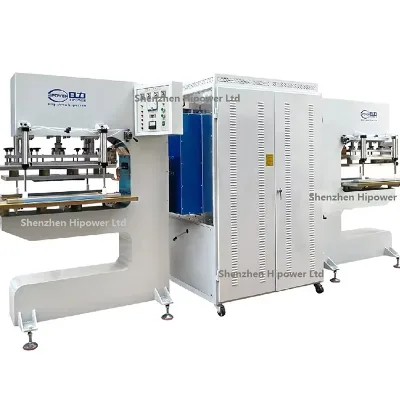
Factory Direct High Frequency Conveyor Belt Welding Machine New 1 Year Warranty
$23586.85 - $25895.35
Moq: 1


Comprehensive Sourcing Guide
Conveyor Belt Welding Machine Sourcing Guide
Buyers must first distinguish between the specific welding technologies available, as the market lists both plastic welders and specialized vulcanizing units for heavy-duty applications. The observed product range includes models designed for manual operation with alternating current inputs, alongside semiautomatic and fully automatic systems tailored for high-volume industrial environments. Understanding whether a facility requires a portable unit for field repairs or a stationary horizontal press for continuous production lines is the primary decision point before evaluating specific technical parameters.
Procurement teams should also analyze the customization capabilities inherent in the listed inventory, as many suppliers offer tailored configurations for unique belt widths and material compositions. The data indicates that color, packaging, and specific model numbers like the HR series are often adjustable to meet client requirements, suggesting a flexible supply chain for specialized projects. Buyers need to verify if the standard offerings align with their existing infrastructure or if they must request bespoke engineering solutions to ensure seamless integration into their current conveyor systems.
Product Scope and Observed Listing Signals
The observed product listings reveal a diverse range of models, from the HR-15KW-1C to the ZLJ-1200*830, each serving distinct operational needs within the mining, cement, and port sectors. These machines are explicitly designed for jointing nylon, fabric, and rubber conveyor belts, with some units capable of handling widths ranging from 600mm to 2600mm depending on the specific configuration. Buyers should carefully map their required belt dimensions against the maximum width specifications of available units to avoid purchasing equipment that cannot accommodate their specific material throughput.
Listing signals also highlight significant variations in power consumption and heating methods, with electric heating systems ranging from 14kW to 25kW and warming times generally under 25 minutes. The presence of both inner water and air cooling systems suggests that environmental conditions and duty cycles will heavily influence the final selection. Procurement officers must evaluate whether the observed power ratings and cooling mechanisms are sufficient for their specific operational intensity, ensuring the selected machine can maintain consistent performance without overheating during extended use.
Technical Specifications to Verify
When evaluating technical performance, the heating temperature and pressure capabilities are critical metrics that directly impact the quality of the weld joint. The available data specifies a vulcanizing temperature of 145°C and working pressures up to 2MPa, which are essential for achieving the necessary bond strength in rubber and fabric belts. Buyers must verify that the specific unit they select can consistently maintain these parameters across the entire width of the belt, as uneven heating or pressure distribution can lead to premature failure in the field.
Control modes and automation levels represent another vital area for verification, with options ranging from manual operation to fully automatic systems featuring adjustable curing times. The observed curing time ranges from 0 to 99 minutes, allowing for flexibility in processing different belt thicknesses and materials. Procurement teams should confirm that the control interface allows for precise adjustments to heating and curing cycles, ensuring that the machine can adapt to varying production requirements without requiring complex reconfiguration or manual intervention.
Compliance and Safety Documentation
Safety and regulatory compliance are paramount when sourcing industrial machinery, and the observed listings frequently cite CE certification as a baseline standard for these welding units. While some entries also mention ISO certification, buyers must request and verify the specific validity of these certificates for the exact model being purchased, as compliance status can vary between different production batches or configurations. Ensuring that the machine meets the electrical and mechanical safety standards of the destination country is a non-negotiable step before finalizing any purchase agreement.
Documentation regarding the machine's construction materials and structural integrity is equally important for long-term operational safety. The use of high-strength aluminum alloy for structural components is noted in several listings, providing a balance of durability and weight reduction. Buyers should request detailed material certificates and structural design specifications to confirm that the machine can withstand the high pressures and temperatures required for vulcanization without risking structural deformation or safety hazards during operation.
Cost Drivers and Commercial Terms
The pricing structure for conveyor belt welding machines is influenced by several key factors, including the power rating, automation level, and the extent of customization required. The observed price range is broad, reflecting the difference between basic manual units and advanced automatic systems with complex cooling and control features. Buyers should anticipate that higher power models and those with fully automatic grading will command a premium, and they must clearly define their budget constraints against the necessary technical capabilities to avoid overspending on unneeded features.
Commercial terms such as packaging, warranty, and after-sales support significantly affect the total cost of ownership and should be scrutinized during negotiations. Most suppliers offer wood case packaging to protect the equipment during transit, and a standard one-year warranty period is commonly observed in the market. Procurement teams must clarify the scope of the warranty, the availability of video technical support, and the lead times for spare parts to ensure that the supplier can provide reliable long-term service and minimize downtime in the event of equipment failure.
Supplier Qualification and Quality Control
Supplier qualification requires a thorough review of the manufacturer's origin and their track record in producing industrial welding equipment. The majority of the observed listings originate from Shenzhen, China, a hub for manufacturing that offers competitive pricing but requires rigorous vetting to ensure quality consistency. Buyers should verify the supplier's production capacity, quality control processes, and history of delivering units that meet the specified technical standards to mitigate the risks associated with cross-border procurement.
Quality control protocols must be established to ensure that the delivered machines match the agreed-upon specifications and performance expectations. Given the variation in automatic grades from semiautomatic to fully automatic, buyers should request pre-shipment inspection reports or third-party testing results to validate the machine's functionality. Establishing clear acceptance criteria for the heating elements, pressure systems, and control interfaces before shipment is essential to prevent receiving equipment that fails to meet the operational demands of the facility.
Long-Term Procurement Checks
Sustainable procurement strategies for conveyor belt welding machines involve planning for the entire lifecycle of the equipment, including maintenance, spare parts availability, and potential upgrades. Buyers should assess the supplier's ability to provide ongoing technical support and the availability of replacement components such as heating plates and pressure sensors. A robust after-sales service system, including video technical support, is crucial for troubleshooting issues remotely and ensuring that the machine remains operational with minimal disruption to production schedules.
Finally, buyers must consider the adaptability of the machine to future operational changes, such as shifts in belt material types or increases in production volume. The observed customization options for model numbers and packing suggest that suppliers can often modify existing designs to suit evolving needs. Procurement teams should negotiate flexible terms that allow for future upgrades or modifications, ensuring that the initial investment remains relevant and effective as the facility's requirements grow and change over time.
FAQs
How long does it take to complete a conveyor belt splice with this machine?
A typical splice cycle uses a warm-up time of less than 25 minutes and a belt vulcanizing temperature of 145°C, with cooling in about 15 minutes. Some models list heating times under 20 minutes and an adjustable curing range of 0-99 minutes. Actual cycle length depends on belt material, thickness, and the curing time set for the joint.
What types of conveyor belts can the machine vulcanize?
The listed machines suit nylon, fabric, and rubber conveyor belts for joint conveyor belt applications. Belt widths handled range from 650mm to 2600mm on some models, with maximum widths of 600-1600mm on others, so you should confirm the exact model's width range against your belt before ordering. PVC welding variants are also offered in the product line.
Which certification and quality standards do the machines carry?
The product pages list CE certification, and some models carry ISO and CE together. Products originate from Shenzhen, China. Certification coverage can vary between models, so ask the seller to confirm which certificates apply to the specific model number you intend to purchase, and request copies of the relevant certificates for your import documentation.
Can the machines be customized or supplied under OEM terms?
Yes, customization is listed as available, colors can be customized, and OEM orders are accepted. Packing is a wooden case or wood box by default, and customized packaging can also be arranged. When requesting customization, specify the model such as HR-15KW-2C, your required voltage, and any packaging or labeling requirements so the factory can quote accurately.
What power and pressure specifications should I verify before ordering?
Key specifications include AC380V voltage with alternating current, power ratings such as 14kW on listed models, working pressure of 0-2MPa or 1.5 MPa depending on the model, and electric heating. Cooling can be inner water or air cooling. Confirm these values against your site's power supply and splicing requirements before placing an order.
What after-sales support and warranty are provided?
The listed products carry a warranty period of 1 year and offer video technical support as the after-sales service system. Machines are new condition, with automatic or semiautomatic grades and manual control mode depending on the model. Clarify warranty scope, spare parts availability, and the extent of remote technical support with the seller before finalizing your purchase.